
Under Oath
Skills for testifying in court
• What to expect from the testimonial process
• How office policies can make responding to testimonial subpoenas easier
When your clinical work enters the courtroom, preparation matters.
For many mental health professionals, the thought of testifying in court is intimidating.
What will the attorney ask?
What am I allowed to say?
What if I do not remember?
What happens when the questions become aggressive?
And perhaps most importantly: How do I remain a therapist while participating in an adversarial legal process?
This training focuses on the practical skills mental health professionals need when they are called to testify in family law matters.
What You’ll Learn
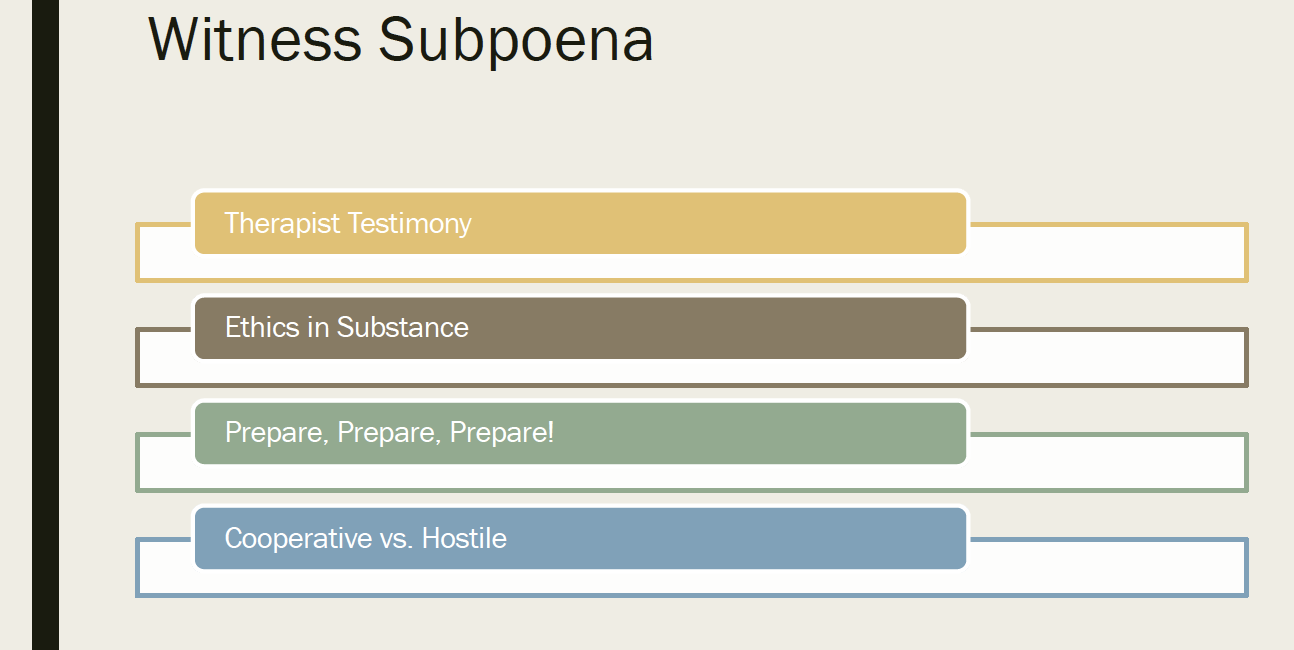
• How testimonial subpoenas work
• What to look for when you receive a subpoena requiring testimony
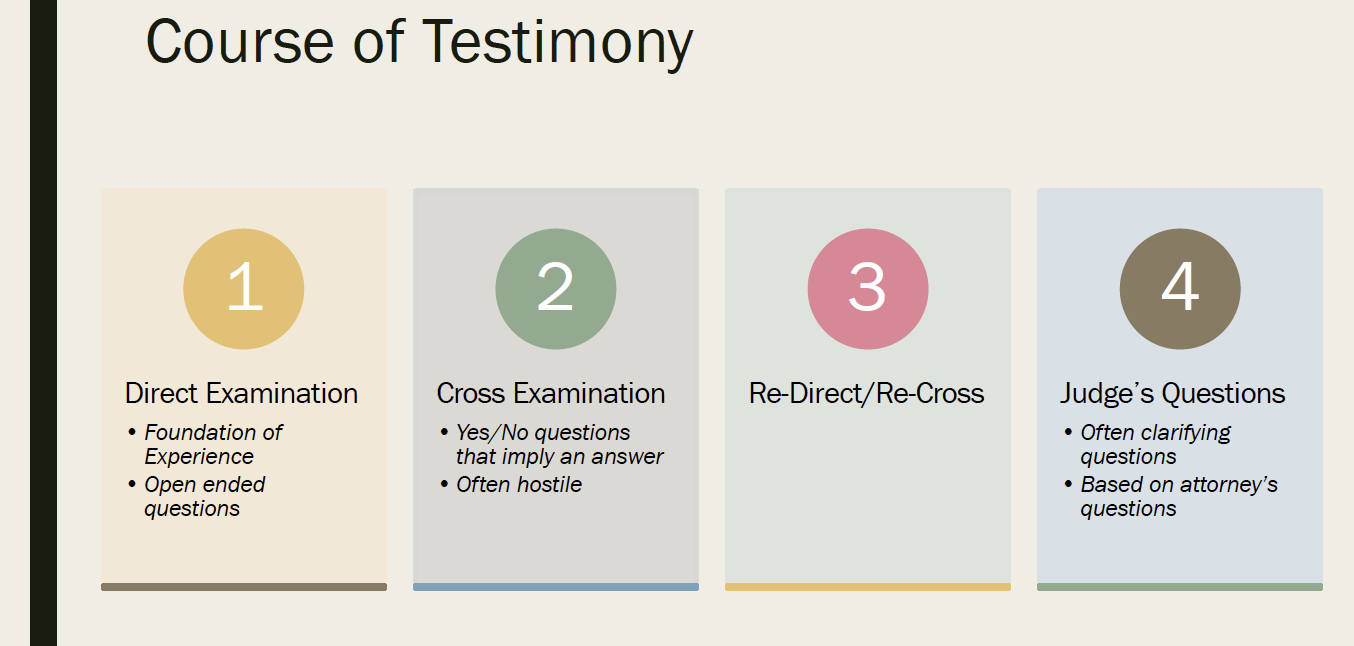
• How to prepare for testimony
• The importance of knowing and reviewing your records
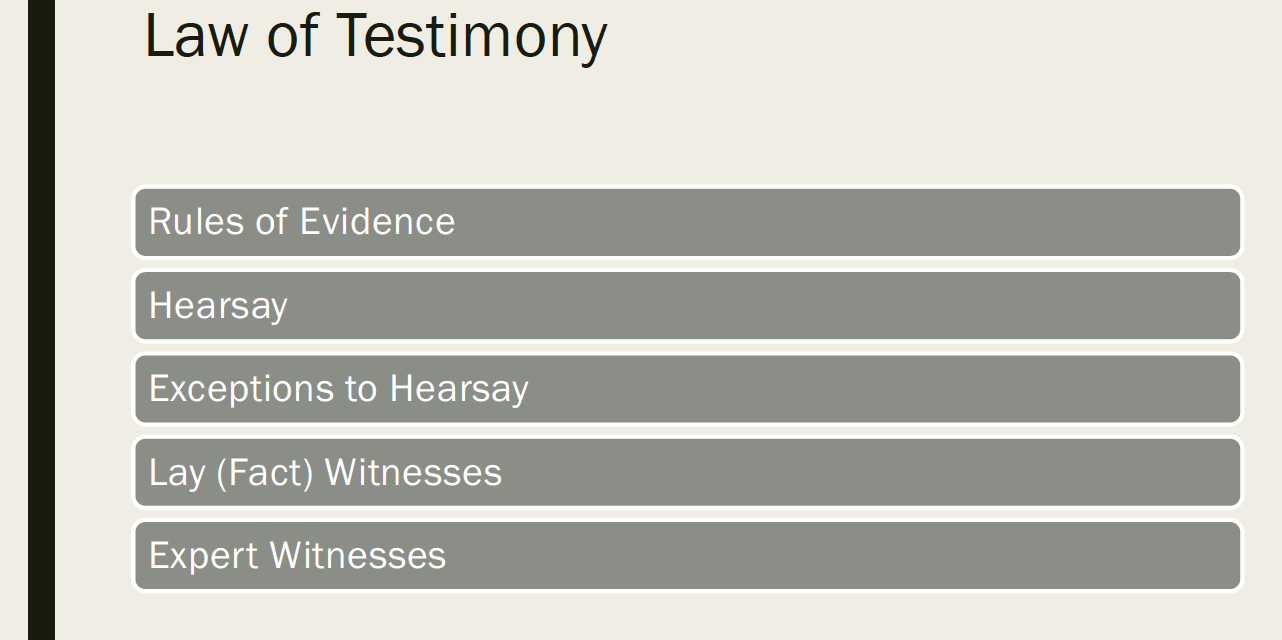
• How to distinguish between facts you know, information contained in your records, and professional opinions
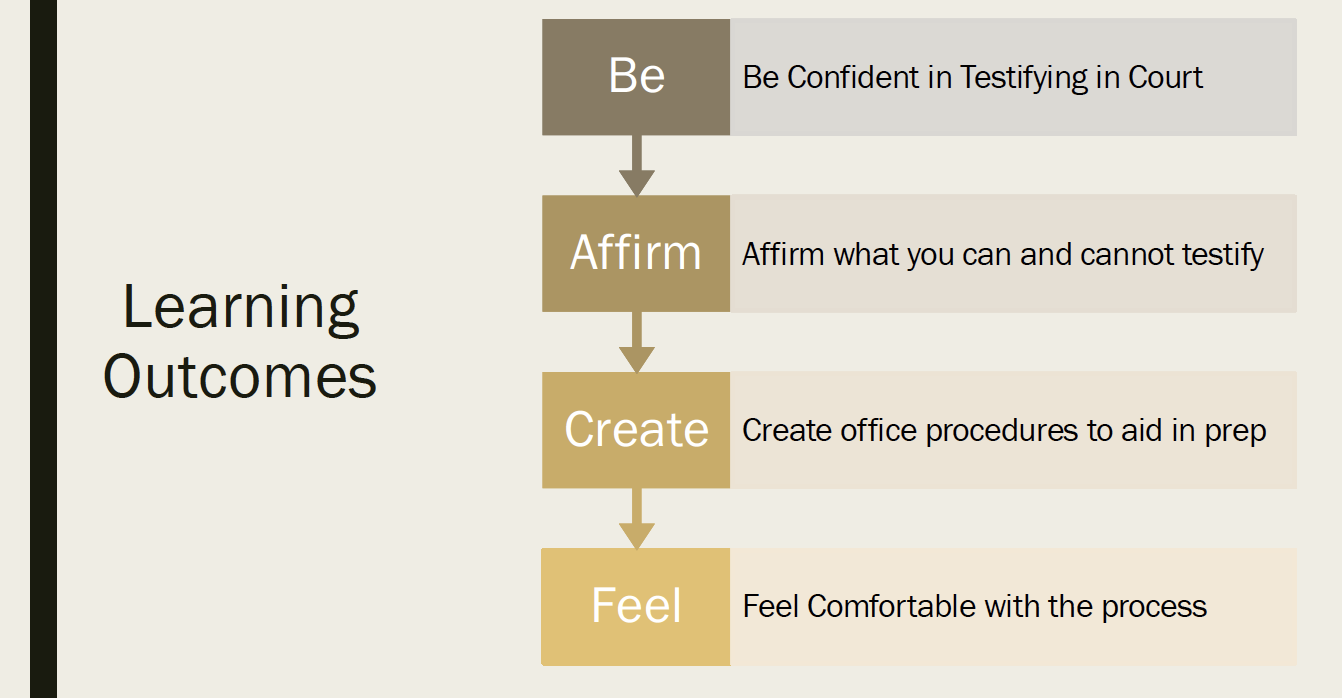
• How to stay within the appropriate scope of your role and expertise
• How to respond to questions clearly and directly
• Common challenges that arise during testimony
The Takeaway
Court testimony does not have to be a mystery.
With preparation, an understanding of the process, and a clear sense of your professional role, you can approach testimony with greater confidence.
The goal is not to teach you how to "win" in court.
The goal is to help you become a prepared, credible, and confident witness while maintaining the professional standards that guide your clinical practice.